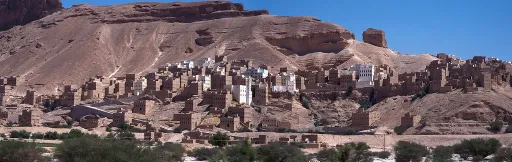
YEMEN HISTORY & THE QUEEN BALQIS OR SHEBA

There are, however, records of the ancient country of Sheba, which date from 715 BCE. Sheba was sometimes called Saba, meaning “Host of Heaven,” and “peace,” and is thought to be what is now the country of Yemen in the South West corner of Arabia where the Red Sea meets the Indian Ocean. Sheba in the territory located in southwestern Arabia, south of Ma‘in and west of Qataban and Hadramout, which was known as the Kingdom of Sheba. The people of Sheba, or the Sabaeans as they were called, were of Semitic descent and were governed by mukarrib – a priest-king ruler from the Royal City of Marib. It was also suggested that the Kingdom of Sheba could have extended even to the Horn of East Africa across the Red Sea from Sheba due to close linguistic affinities between epigraphical South Arabian and the classical language of Ethiopia, especially Geez ʿ. Furthermore, the connections between the two shores of the southern Red Sea have at all times been close. The people who lived in Sheba were called Sabaeans. The Sabaeans have been described as a tall and commanding people, both woolly-haired and straight-haired. Semitic in origin, they are believed to have been descendants of the land of Cush in the Bible. The Sabaean people inhabited most of NW and SW Arabia, some 483,000 square miles of mountains, valley and deserts.

QUEEN SHEBA AND HER SABAEANS PEOPLE OF YEMEN

Sheba was a wealthy country with an advanced irrigation system. Its people, the Sabaeans, built dams as high as 60 feet with spans of almost a mile. They cut large earthen wells its the Earth, which allowed them to irrigate their abundant gardens. Sheba was also rich in gold and other precious stones. But her real wealth was in her exclusive trade in frankincense and exotic spices sought by neighbouring kingdoms. Sheba also had a very lucrative caravan trade. By 1000 B.C., camels frequently travelled the 1400 miles up the “Incense Road” and along the Red Sea to Israel. The Road began in the port of Al Mukulla and Bir Ali where ships would bring goods from distant India and the Orient. Frankincense is unique to Yemen since it is derived from the sap of a certain tree that grows only in Yemen. Frankincense was used as an offering to the gods and its rich perfumed smoke would rise like prayers to the heavens. It’s aroma also made it valuable during cremations and it was often heaped on funeral pyres. Another Sabaean spice was Frankincense/Myrrh, an ingredient in fragrant oils and cosmetics. It was also used in preparing bodies for burial.

THE KINGDOM PALACE OF QUEEN SHEBA

Now, Mareb has harsh weather, with dust and moving sands, and Yemenis are building a new Mareb on the remains of Selhin Palace, Hejr and Nashib, keeping in mind they are the descendants of those who built a great ancient capital, the lovely Mareb. King Solomon inherited David’s prophethood and dominion. This was not a material inheritance, as prophets do not bequeath their property. It is given away to the poor and needy, not to their relatives. After his father’s death, Solomon became king. He begged “Ellah/Allah/God” for a kingdom such as none after him would have, and “Ellah/Allah/God” granted his wish. Besides wisdom, “Ellah/Allah/God” had blessed Solomon with many abilities. He could command the winds and understand and talk to birds and animals. “Ellah/Allah/God” directed him to teach both men and jinns to mine the earth and extract its minerals to make tools and weapons. He also favored him with a mine of copper, which was a rare metal in those days.

KING SOLOMON OF THE QUEEN SHEBA-BALQIS

During his time horses were the common mode of transportation. They were very essential for defense, to carry soldiers and cart provisions and weapons of war. The animals were well cared for and well trained. One day Solomon was reviewing a parade of his stable. The fitness, beauty and posture of the horses fascinated him so much that he kept on stroking and admiring them. The sun was nearly setting, and the time for the middle prayer was passing by. When he realized this, he exclaimed: “I surely love the finer things of life than the service of my Lord! Return them to me.
” When the queen of Sheba heard about the fame of Solomon and his relationship to the LORD, she came to test Solomon with hard questions. Arriving at Jerusalem with a very great caravan—with camels carrying spices, large quantities of gold, and precious stones—she came to Solomon and talked with him about all that she had on her mind. Solomon answered all her questions; nothing was too hard for the king to explain to her. When the queen of Sheba saw all the wisdom of Solomon and the palace he had built, the food on his table, the seating of his officials, the attending servants in their robes, his cup bearers, and the burnt offerings he made at the temple of the LORD, she was overwhelmed. She said to the king, “The report I heard in my own country about your achievements and your wisdom is true. But I did not believe these things until I came and saw with my own eyes. Indeed, not even half was told me; in wisdom and wealth you have far exceeded the report I heard.

THE LAND OF POWERFUL KINGDOM OF SABA

Study for the head of the Queen of Sheba mid 1880s By Artist Sir Edward John Poynter England 20 Mar 1836 – 26 Jul 1919 One of Poynter’s greatest challenges was that of representing a figure as legendary and enigmatic as the Queen of Sheba. For although her story has been variously elaborated by different faith traditions, her true origins and identity are mysterious and have confounded archaeologists. Poynter’s late Victorian retelling of Sheba’s fabled meeting with Solomon at his palace in Jerusalem, where she comes to witness the king’s wealth and test his wisdom with ‘hard questions’, is described in the Old Testament Book of Kings. The land from which the queen is believed to originate is the powerful kingdom of Saba, in present day Yemen. Surprisingly, Poynter first envisioned Sheba as a fair English beauty. In subsequent drawings he gradually modified the model’s features and changed her appearance, giving her the form, she would assume in the final painting as an alluring and exotic queen.
When the painting was exhibited in London in 1890, Walter Armstrong, author of the accompanying pamphlet, described the figure as resembling a ‘Hindoo Goddess’. Others thought she looked like a composite of ‘an Egyptian and an Indian Queen’ means not an Ethiopian but Yemeni look. That Poynter chose to focus more on Sheba’s exotic beauty than her racial specificity is perhaps not surprising given that the topic of ideal feminine beauty was one of the great preoccupations of Victorian art, and of the culture at large. Peter Raissis, Prints & drawings Europe 1500–1900, 2014.

RELATION BETWEEN SHEBA AND KING SOLOMON.

It is interesting to note that in the Babylonian Talmud wine is mixed with frankincense not myrrh, and it was given by the women of Jerusalem for those condemned to death to numb the senses – “Give strong drink unto him that is ready to perish, and wine unto the bitter in soul.” Commiphora myrrha was an ingredient of Ketoret, the consecrated incense used in the First and Second Temples at Jerusalem, as described in the Hebrew Bible and Talmud. An offering was made of the Ketoret on a special incense altar, and was an important component of the Temple service.
Socotran Frankincense Trees growing wild only on Socotra are vulnerable to climate and land use patterns but respond to cultivation under proper growing conditions. Situated 250 miles off the coast of Yemen, Socotra is the largest member of an archipelago of the same name, a four-island ellipsis that trails off the Horn of Africa into the Gulf of Aden. Queen Sheba/Melikat Sabat in Arabic, clear version in the Islamic and Quranic verses. Relation between Sheba and King Solomon.

KINGDOMS OF SOUTHERN ARABIA

The Sabaeans conquered all of the other South Arabian countries at the start of the Christian era. Sheba was a wealthy country, rich in gold and other precious stones, as well as incense and exotic spices sought by neighboring kingdoms. From ancient times, perfumes and spices were popular commodities in the near East, and the spice trade was a particularly active one. From both the Bible and other classical sources it appears that the valuable plants from which the coveted aromatic resins, incense, spices, and medicinal potions were produced, were grown mainly in the kingdoms of southern Arabia. From this area, major land and sea trade routes branched out to all the great trading centers of the ancient world.
The Sabaeans were both extensive traders and bandits and engaged in the slave trade. Sheba engaged in a lucrative caravan trade. By 1000 BCE, camels frequently travelled the 1400 miles up the “Incense Road” and along the Red Sea to Israel. The spices of Sheba were highly prized. Frankincense, an offering to the gods, was heaped on funeral pyres, and given as an antidote for poison, and as a treatment for chest pains, hemorrhoids and paralysis.

ARCHAEOLOGICAL EVIDENCE-YEMEN

The key to the shaping of the South Arabian religion in modern consciousness comes from the association of masculinity with the Moon-God in Semitic religion. The missionaries are clearly unfamiliar as to how this viewpoint originated and what its implications are. They claim concerning Ilmaqah that “everyone knew he was a moon god”. This is strange because all the information about Sheba was lost over centuries and it was rediscovered only in the middle of the 19th century during the expedition of the French pharmacist, Th. Joseph Arnaud.
He arrived in anāS in July 1843 and visited the ancient monuments of Marib, notably the dam, the temple of Ilmaqah and the ruins of irwā. Thereafter, the archaeological expeditions of Sheba led by Joseph Halévy (1827-1917), organized by Academie des Inscriptions et Belles-Lettres of Paris, discovered numerous sites and copied 686 inscriptions. This marked the true beginning of South Arabian studies. The third explorer, Eduard Glaser (1855-1908), an Austrian, played an important role in advancing Sabaean studies. He made four expeditions to Yemen between 1882 and 1894 during the Ottoman occupation of the country. He produced some extraordinary results. The first archaeological excavation to Yemen took place in 1927-8 when the explorer Carl Rathjens and geographer Hermann von Wissmann uncovered the small temple at al-Huqqa, 23 km north-north-west. The second archaeological excavation was conducted in 1937-8 by the British archaeologist Gertrude Caton-Thompson at the Sayīn (SYN) temple at Hureida, in association with geologist Einor Gardner and the explorer Freya Stark. There were no more expeditions until 1951 when the American Foundation for the Study of Man (AFSM), led by its director and founder Wendell Phillips, excavated the peristyle hall of the Ma ram Bilqis h but was cut short due to insecurity.

SOUTH ARABIAN CULTURE AND RELIGION

Other archaeological excavations also took place which improved the understanding of South Arabian culture and religion. Our knowledge of Sheba and its patron god Ilmaqah comes from these archaeological expeditions and excavations conducted in the last 150 years. Clearly, “everyone” could not have known that Ilmaqah was “a moon god”, when there exists no evidence, whether inscriptional or literary, in order to prove it. Commiphora myrrha is the chief source of myrrh today, while Commiphora erythraea was the (myrrh) of the Queen Sheba of Yemen and the Ancient Egyptians and the “scented myrrh” of Pliny.
The classical author Dioscorides, writing in the 1st century AD, suggests that Commiphora myrrha could heal dysentery and kill worms and, rubbed on with the flesh of a snail, it could treat broken ears and exposed bones. It was also used to worship the gods and to flavour wine and to mummify the dead in ancient Egypt. From a culinary perspective, Pliny points to the spicing of wine with myrrh among the Romans (catissima apud priscos vina erarit murrae odore condita; Pliny, Nat. Hist. 14.92), acting as a preservative and imparting a slightly bitter taste. In fact, Roman wine would have been highly aromatic as wine amphorae were lined with a resin from pine trees, so imparting a distinctive flavour to some of the long-hauled wine in the Roman Empire, which is basis for retsina idea today.